


What should manufacturers actually look for when evaluating a Leading Injection Molding Factory In China? Production capacity is only one part of the answer. For medical, automotive, consumer, industrial, baby care, and precision-component programs, manufacturers increasingly need suppliers that can combine mold engineering, stable process control, automation, quality management, and scalable production. These priorities also reflect the broader direction of NPE, where automation, manufacturing technology, new materials, and sustainability are central topics for the plastics industry.
For Hongrita, the discussion around NPE provides a useful way to examine how smart manufacturing can support precision Injection Molding in practical production environments. Rather than treating digitalization as a separate technology layer, the company connects precision tooling, molding processes, production monitoring, and manufacturing management within a broader operating system.
From Precision Mold Making to Integrated Manufacturing
Hongrita was established in Hong Kong in 1988, initially focusing on mold and hardware component processing. The business later expanded into plastic molding and secondary processing, while developing more specialized capabilities in precision molds. In 2003, Hongrita began developing multi-material and multi-component molding technologies, followed by advances in liquid silicone rubber mold and molding technology in 2012.
Today, its core manufacturing capabilities include multi-component injection molding, multi-cavitation molds, LSR injection molding, precision injection molding, high-performance tooling, and digitalized intelligent manufacturing. Its operations serve sectors including medical, health and lifestyle products, baby care, automotive, industrial products, consumer applications, packaging, and precision tooling.
This development reflects a wider change in the injection molding industry. OEMs are increasingly evaluating an Injection Molding Factory not simply by machine capacity, but by how effectively it manages the entire process from design-for-manufacturing and tooling to molding, inspection, automation, and repeat production.
How Smart Manufacturing Supports Precision Production
Smart manufacturing is particularly relevant to precision molding because many production problems result from variation rather than a lack of nominal machine capability.
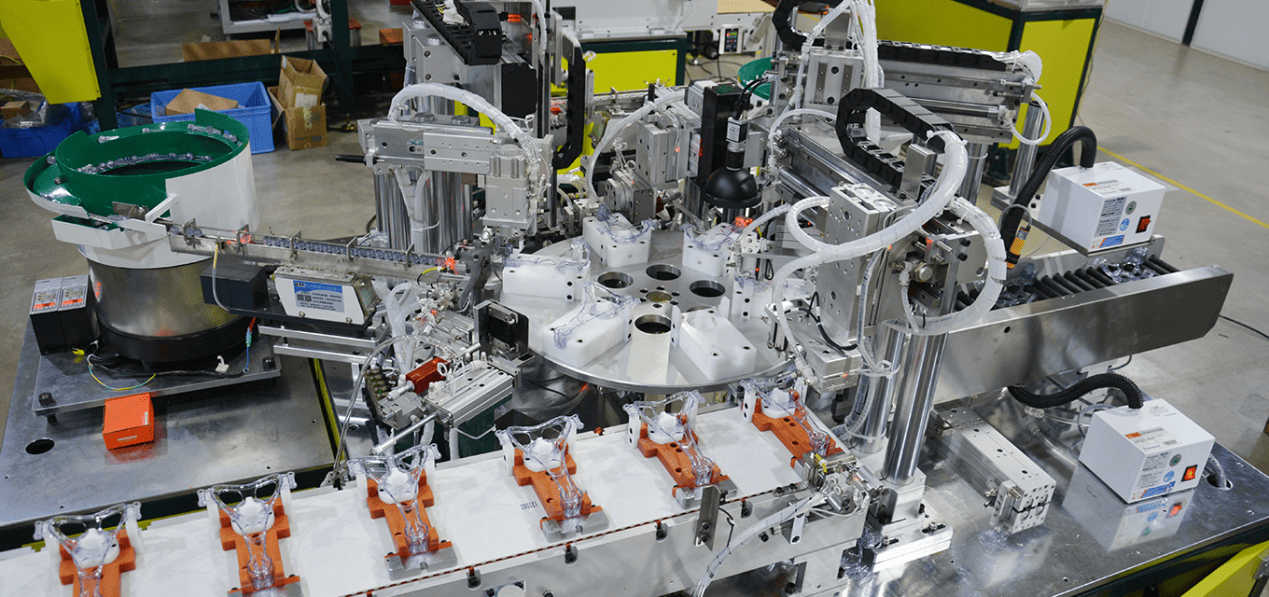
Hongrita describes its approach as a digitalized intelligent manufacturing platform connecting high-performance mold manufacturing, precision injection molding workshops, digital management, and production processes. Smart systems are applied to improve automation, manufacturing management, AI-supported decision-making, operational efficiency, and quality control.
The practical objective is repeatability.
In a conventional production environment, engineers may respond to dimensional variation, cycle-time changes, or quality problems through individual machine adjustments. A more connected manufacturing environment allows tooling conditions, equipment configuration, process parameters, and quality information to be considered together.
This matters for high-volume production. A mold that performs correctly during qualification still has to maintain stable output across shifts and extended production runs. Hongrita’s precision molding approach therefore emphasizes monitoring quality during production and making timely process improvements rather than relying only on final inspection.
Precision Tooling as the Foundation of Injection Molding
Digital manufacturing cannot compensate for inadequate mold engineering. Precision production begins with tooling.
Hongrita’s tooling capabilities include complex precision molds, multi-cavitation molds, multi-component systems, and advanced tooling solutions. Earlier supplier involvement is also part of its engineering model, allowing manufacturability, material behavior, mold structure, and production requirements to be considered before a program moves into volume manufacturing.
Multi-cavitation technology is especially relevant when production volume increases. Instead of viewing productivity only in terms of faster machine movement, multi-cavity mold engineering can increase output per molding cycle while maintaining dimensional requirements across individual cavities.
Multi-component Injection Molding addresses a different challenge. It enables multiple materials or functional characteristics to be integrated into one molded component or assembly. This can reduce downstream operations for products that require combinations of rigid and soft materials, sealing functions, or integrated features.
Liquid Injection Molding for More Demanding Applications
Another important part of Hongrita’s manufacturing capability is Liquid Injection Molding, particularly liquid silicone rubber (LSR) processing.
LSR offers characteristics such as flexibility, heat resistance, durability, and suitability for applications requiring complex geometries. Hongrita applies LSR and multi-component silicone molding across medical, automotive, consumer, and other precision applications.
The process also presents specific manufacturing challenges. Material preparation, mold design, temperature management, curing conditions, and process stability all influence the finished component. This makes the relationship between tooling expertise and production control particularly important.
For medical applications, Hongrita lists products and manufacturing experience covering medical consumables, modular assemblies, syringes, blood glucose monitoring components, blood test tubes, respiratory masks, and precision molded parts. Its medical manufacturing services also extend from DFM and product development to precision plastic components and assembly.
Applications in Automotive and Other Precision Markets
Automotive manufacturing provides another example of why integrated molding capabilities matter.
Hongrita reports experience with LSR molding, multi-component molding, metal insert molding, and stack molds for automotive applications. Its website identifies work supporting luxury automotive brands including Mercedes-Benz, BMW, and Audi, as well as Japanese OEMs such as Toyota and Nissan. Product applications include keyless-entry components, 3K sensors, control buttons, pedals, dashboard components, LSR wire seals, and ECU brackets.
These applications illustrate the broader requirements facing a modern injection molding supplier. Components may need tight dimensional tolerances, multiple materials, sealing performance, durable surfaces, reliable assembly interfaces, and consistent output over long production runs.
Similar manufacturing principles apply to industrial, consumer, packaging, health, and baby-care products, even though their regulatory and performance requirements differ.
What NPE Reveals About the Direction of Injection Molding
NPE is particularly relevant to this discussion because the event brings together technologies across the plastics supply chain. The NPE organization identifies automation, sustainability, new materials, and manufacturing among the key areas shaping the industry’s development.
Against this background, the competitive question for an Injection Molding Factory is shifting. Purchasing teams still consider cost, capacity, lead time, and geographic coverage, but engineering teams increasingly need evidence of process visibility, repeatability, tooling competence, quality systems, and the ability to industrialize complex parts.
Hongrita’s development follows this direction. The company has manufacturing operations in Shenzhen and Zhongshan in China as well as Penang, Malaysia, while continuing to develop digital intelligence, AI applications, and smart-factory practices.
From Smart Equipment to a Connected Production System
The main lesson from smart manufacturing is that precision does not come from a single machine or software platform. It depends on how product design, mold engineering, materials, processing equipment, automation, inspection, and production data work together.
For Hongrita, its combination of precision tooling, multi-component molding, multi-cavitation technology, Liquid Injection Molding, and digital manufacturing provides the framework for addressing this challenge. The value of that framework should ultimately be measured through practical manufacturing outcomes: dimensional consistency, process stability, traceable quality, manageable cycle times, and repeatable production.
That is also a useful perspective for manufacturers evaluating a Leading Injection Molding Factory In China after an industry event such as NPE. The important question is not simply what technology appears on the exhibition floor, but how those capabilities operate together when a complex product enters daily production.
More information about Hongrita’s manufacturing capabilities, application sectors, and technical resources is available at https://www.hongrita.com/.
Go back to the previous page